-
Refresh your planning and teaching in the English classroom with this helpful tool
An intuitive sequence of learning can simplify your planning, provide your department with a common language to talk about teaching and learning and help ensure progression for your students. Software engineers at Apple – so the story goes – had… read more

-
How can we make sure our Key Stage 3 English curriculum sequencing doesn’t put the brakes on progress?
In a subject as multi-dimensional as English, it’s crucial that our focus on curriculum sequence and substantive knowledge doesn’t limit strong disciplinary practice I learned to drive in my early twenties. I was a bit older than many of my… read more

-
Transform your students’ writing by teaching them how to blog
Crafting a blog post is a great way for students to learn about the impact of their language choices I had laboured for hours on my music review. I was sixteen years old and so convinced that Mrs McCleary would… read more

-
‘Follow the forest trail: walking in the North York Moors’
The forest trail is gently yielding. And the forest is a place where the imagination is allowed to wander too. The woods of the North York Moors are, without doubt, my favourite place to walk. Yes, a hike up a… read more

-
Teach your students to be more insightful readers with lots of productive talk about texts.
The knowledge and skills to be an astute reader are best developed with lots of talking as well as lots of reading, as I discovered with guest blogger, Jude Macadam. With over thirty years of teaching experience, my colleague Jude… read more

-
Five tricks to help your students get to grips with a new poem
[Traveling In The Dark] is not a poem that is written to support a position that I have chosen, it’s just a poem that grows out of the plight I am in as a human being. William Stafford The poem… read more

-
The indispensable guide to what makes a great feature story
The feature story is a potent and vital form of literary non-fiction. Here, Anthony Cockerill charts its evolution through the years. Of all the different ways to tell stories, the feature article is one of the most compelling, especially when… read more

-
Literacy and film: learning about storycraft with M Night Shyamalan’s The Village
The auteur’s 2004 film works brilliantly in the classroom. I’ve explored some possible ways to use this great film below. The Village (2004), M Night Shyamalan’s beautifully shot, atmospheric film, is great for the classroom. It’s a rare beast: often… read more

-
A Christmas miracle for the English classroom (it involves a film, but students are learning too!)
Writing about Robert Zemeckis’s motion-capture adaptation of A Christmas Carol teaches students to develop an individual response to a ‘text’. It’s that time of year again. The last week of term arrives and Merry Christmas erupts into merry hell as… read more

-
Teach your students to ace AQA’s GCSE English Language P1, Q2
Essential advice that draws on examiners’ reports, past papers and students’ responses, with some great downloadable extracts and helpful resources. 1. Encourage your students to explore deeper layers of meaning. ‘Some [students] offered a basic, generic comment, for example, ‘it… read more

-
How to write great English literature essays at university
Essential advice on how to craft a great English literature essay at university – and how to avoid rookie mistakes. If you’ve just begun to study English literature at university, the prospect of writing that first essay can be daunting.… read more

-
Nine things you need to do to start writing great flash fiction
Want to improve your short stories – or help your students improve theirs? Flash fiction is a great way to start. The enduring appeal of short stories ‘Short stories are tiny windows into other worlds and other minds and other… read more

-
Devising a scheme of learning as part of a thematic curriculum: an in-depth example
How to plan a scheme of learning as part of a thematic curriculum: essential advice Planning a scheme of learning as part of a thematic curriculum In a previous blog post, I advocated for the benefits of a thematic curriculum in… read more

-
Why a thematic curriculum is brilliant for Key Stage 3 English (and why it’s also great for your GCSE students too)
A thematic curriculum allows us to learn about those important touchstones of literary study alongside cultural totems of our time. Why a thematic curriculum? Spoiler alert. In the excellent film Arrival (2016, Denis Villeneuve), Amy Adams plays Louise Banks, an… read more

-
Help your students feel much more confident with GCSE English Language, Paper 2, Question 4
When they’re tackling Paper 2, it’s crucial our students know exactly what each question is demanding of them. Here’s how. In my Year Eleven class, Josh is a Great Dane, on account of his height, which is somewhere in the… read more

-
Ten Persuasive Writing Techniques to Transform Students’ Responses to GCSE English Language, Paper 2, Question 5
Discover some really effective techniques for persuasive writing that will transform students’ planning and allow them to write compelling responses. The writing section of GCSE English Language Paper Two, Section B – persuasive writing or writing to express a viewpoint… read more

-
Teach your students how to compare poems for GCSE English Literature, Paper 2, Section B
Learn some of these brilliant strategies for teaching really effective poetry comparison for GCSE English Literature, Paper 2, Section B. One of the elements of our students’ exam performance we identified as a weakness in last summer’s examination series was… read more

-
How to use urban legends to teach students to write compelling narratives
What can we take from urban legends and their cinematic equivalents when teaching those elements of great stories and narratives? As a university student in the late 1990s, I was fascinated by what was, in hindsight, an early example of… read more

-
‘Vantage Point’
It was a place of frustrated ambitions, low aspirations and barely suppressed cruelty. The outbuildings were crumbling, the timber frames rotten and chains across the doors. Pebble dashed houses were literally a stone’s throw over the metal gate. The goal… read more

-
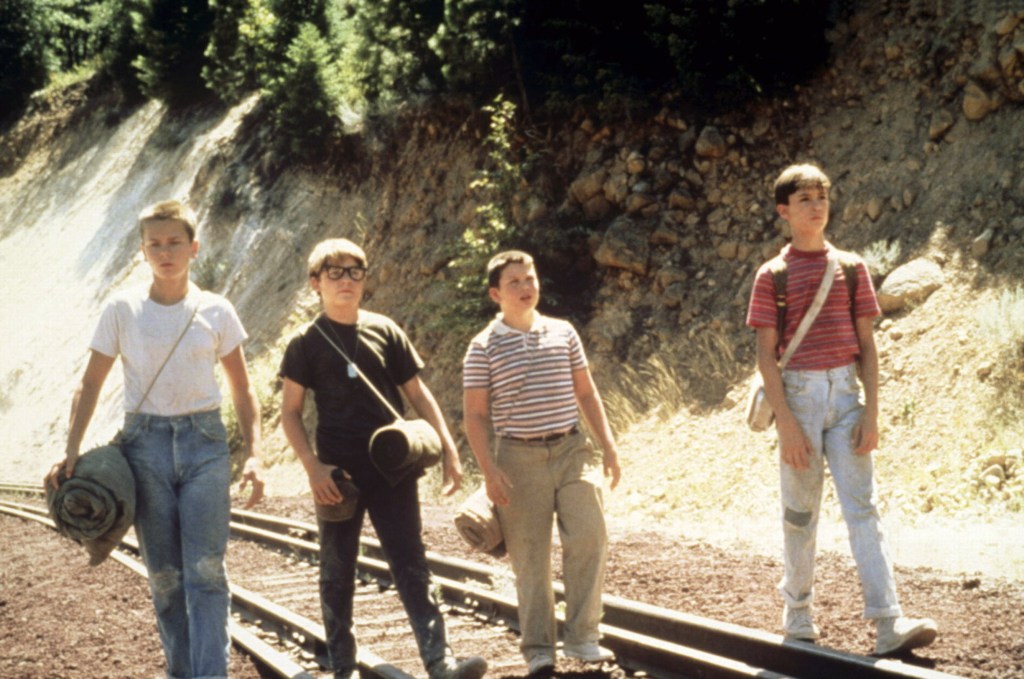
Why my favourite film, Stand By Me, is a brilliant prompt for creative writing
The iconic bridge scene is a great stimulus for writing. I’ve developed some resources to make the most of it. ‘I was twelve going on thirteen the first time I saw a dead human being. It happened in the summer… read more
-
Two very creepy but highly effective extracts for teaching AQA’s GCSE English Language, Paper 1, Question 4
This question offers some really great opportunities for students to productively engage with the idea of thinking and writing analytically Teaching AQA’s GCSE English Language Paper 1 is a brilliant way to explore the craft of fiction. As well as… read more

-
How to teach dystopian creative writing through a ‘creative construct’
I was intrigued to see how the provision of a ‘fictional construct’ might bring about effective learning connected to story-telling Early in my teaching career, I taught a sequence of learning to Year Eight, delivered principally from a text book,… read more

-
Some great suggestions for GCSE English Language, Paper 2, Question 2
What would happen if the students were part of a collaborative planning process when attempting to form a successful answer? There are some notable challenges in preparing students to respond to AQA’s GCSE English Language, Paper Two, Question Two. The… read more

-
What Happens When We Tell Stories From Different Points Of View?
Could playing creatively with narrative perspective help our students to grow in confidence as writers, cultivating more confidence, control and awareness of voice when they write? Almost definitely, as playing creatively has a tendency to boost confidence and foster a… read more

-
What makes great analytical writing?
Teaching great analytical writing means going beyond predictable frameworks to draw out more personal, considered responses. The PEE paragraph and its errant siblings PEEL and PEAZLE have become so ubiquitous a method for laying the foundations of analytical writing with… read more

-
How can moving image help us to teach narrative structure for AQA’s GCSE English Language, Paper 1 Question 3?
Building on students’ experiences with moving image makes preparation for GCSE English Language, Paper 1 Question 3 engaging and enjoyable The introduction of structure as a focus of assessment in GCSE in AQA’s GCSE English Language Paper 1, Question 3… read more

-
Subscribe
Subscribed
Already have a WordPress.com account? Log in now.
 Anthony Cockerill